Showing posts with label Health Tips. Show all posts

Saturday, 12 January 2013

The Good & Evil of Coffee

My husband recently decided (after watching Dr. Oz) that he was going to cut back on the coffee. He said he was going to cut down to one cup a day (I later learned that he had been at 3-4 a day). I was really proud of him, and I really appreciated it because I don’t really like the smell (and the breath!) and I could tell it was affecting him.

With him cutting back I decided to see how bad drinking that much coffee really is and here is what I found.

Though not 100% harmful, coffee is not entirely innocent either...

Health Risks:
- In men with Hypertension there is a significant rise in blood pressure after just two or three cups of coffee.
- As a stimulant coffee can be addictive and could cause jitters and anxiety when consumed in large amounts
- Coffee can also stain teeth, giving daily users a yellowed smile.
- Men who drink five or more cups of coffee a day may have cardiac trouble.
- Coffee drinking leads to Pancreatic Cancer.
- Researchers suggest that caffeine may delay conception, increase the risk of miscarriage and slow fetal growth.
- Many specialists suggest that pregnant women should eliminate caffeine altogether. Caffeine has the negative effect on calcium metabolism. Women who consume more caffeine lose more calcium through their urine and have less dense bones and may lead to Osteoporosis. In postmenopausal women, it leads to increased risk of hip fractures.
- Those who drink more than three cups of coffee (or other beverages equivalent to that quantity of caffeine) have disturbed sleep. The effect of bad sleep during the night may lead to all kinds of diseases.
- When a person drinks a coffee or tea on empty stomach, the caffeine present in such a drink is absorbed in different forums and circulated all over the body causing symptoms of Hyper acidity, which may lead to indigestion, giddiness, burning sensations etc.
Coffee Consumption Facts:

- One cup of coffee is equal to two cups of tea. (i.e. caffeine available in one cup of coffee is equivalent to the caffeine available in two cups of tea.)
- Caffeine consumed from three cups of coffee still has stimulating effects up to eight hours later. Research subjects who say that they can drink coffee before going to bed and still sleep well, actually don't sleep as well as they think, when there are tested in the lab.
- We don't actually get the energy and stimulation from coffee, but we get a feeling of stimulation and the energy in question is obtained from our own body. In effect it is only a mental satisfaction.
- Generally coffee, tea and other caffeinated beverages (e.g. soft drinks) keep a person awake for a long time. So a lot of athletes and distance runners take it to help with their speed and energy levels.
- Caffeine can (at times) be used to eliminate headaches and as a laxative.
I’ve never been a coffee drinker, and never intend to start so I have to admit I have a bias. But love it or hate it we can’t ignore what it does to our health.

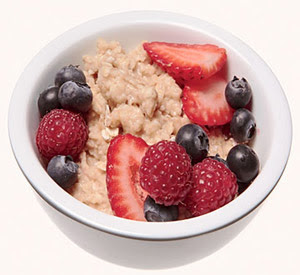
Candida Diet Approved Oatmeal


So as you know I'm on this crazy strict diet right now and I just got this recipe from my doctor. I was sort of stuck with what to make for breaky. Eggs and protein shakes get pretty boring after a while so I'm pretty excited to try this! I know, it doesn't look that exciting but for someone on a Candida diet I think it's pretty great!!

½ cup raw whole rolled oats
¾ cup vanilla rice milk (or almond milk)
¾ cups water
Pinch or two of cinnamon
1 ripe banana
½ cup berries (blueberries, strawberries – organic, raspberry, saskattoon)
Put all the ingredients in a pot and bring to a boil.
Reduce heat (2-3) and simmer for 10-12 minutes

Wednesday, 28 November 2012

Jump starting your Metabolism


The best way to jump-start your metabolism is to exercise. Exercise will reduce body fat and increase lean muscle mass. By increasing lean muscle mass, metabolism will increase and aid in the weight-loss process. Muscle tissue uses more calories than fat tissue because it has a higher metabolic rate. Aerobic exercise, like walking, swimming or cycling, has the added bonus of speeding up your metabolism for 4 to 8 hours after you stop exercising. Additional calories will be burned off long after you stop exercising. Weight lifting, resistance or strength training, does not speed up your metabolism, but it does burn fat and increase your lean muscle mass which increases your resting metabolic rate.
Information found at www.consumeraffairs.com

Tuesday, 13 November 2012

Taking Control


ONLY I CAN CONTROL:

· How hard I work
· How much I learn
· How close I am to my team
· How creative I am in business -Mark Sanborn


I got this quote from a girlfriend who sends out daily quotes (which I think is wonderful) and thought it was a perfect health tip. I know it’s not my usual health tip material, but I’m planning to switch it up a bit! (Change is good!)

How often do we try to pin things on others? “It’s not my fault it’s not going faster”, “It’s not my fault, they didn’t teach me how to do it very well”, “It’s not my fault we don’t get along”. You have the power to change almost anything in your life (with enough effort).

So if you don’t like what’s going on, if you don’t like your situation make some change! Sit down and write a list of what you want to have happen, what you want to be better at, what would be healthy options for a better and more productive you! It’s time to care a little more about your mind, and take up the responsibility of getting the job (of life) done well!


What could you do better at? I know I have my list going!

Thursday, 8 November 2012

The Benefits Of Stretching

There are plenty of advantages to stretching - provided you do it right. Stretching keeps your muscles flexible and healthy, and helps keep your body young. It even helps prevent certain kinds of muscular degeneration.
One of the primary components of keeping fit is to keep your muscles flexible. It dispenses with stiffness - which is a major obstacle to fitness. Stretching helps limber up muscles and keeps them in peak working conditions. They help reap the benefits of exercise and workouts. But as mentioned earlier - stretching should be done right - or you could end up hurting your muscles.
Here are a few basic facts about stretching:
It's a common misconception that you need to stretch before you warm up. Start off your day with a walk. This would provide the initial much needed warm up. When you take the trouble to warm up - the blood rushes to the muscles - making them more amenable to stretches and exercises. Stretching cold muscles is likely to hurt.
Start off with gentle stretches. Don't stiffen your limbs - but stretch them easily. Don't hold your stretches or stretch for too long. If it hurts - stop at once - you could injure a muscle if you continue. Stretching is never supposed to hurt.

Muscles tend to stiffen immediately after a vigorous workout. A stretching session after your exercise will keep your muscles lithe and supple.


Ideally, stretching is about moving a muscle to its full range - and holding it there for about 10 seconds before you relax. This should be repeated about 10 times for each part of the body. Do this at least 3 -4 times a week.

Stretching can benefit your mind too. That's why a lot of yogic exercises use different kinds of stretching. Focus on the muscles you are stretching. Slow repetitive movements done with controlled breathing are a sure way to bust stress.
Stretch the advantage of good health - with a few stretches.
Here are some helpful stretching charts to get you started!


Monday, 5 November 2012

The Benefits Of Infrared Sauna


We had an infrared sauna when I lived at my mom’s and she still had a house. I was about 20lbs over weight, had bad skin, bad digestion and headaches. I went in the sauna, 4 times a week, for around 3 months and I lost the weight (along with swimming and eating better), my skin got better, and so did my digestion and the headaches went away completely!

Infrared saunas are different then steam sauna and have different health benifits. They aren't as common (yet) but if you can find one to use I would strongly suggest it!


Did you know that using an infrared sauna:


- Causes weight loss (without having to lift a finger)
- Helps treat cellulites
- Improves your immune system
- Improves your strength and vitality
- Helps cure several skin diseases like eczema, psoriasis and acne
- Strengthens the cardio-vascular system
- Helps control your blood pressure
Detoxifies your body
- Gives you more energy and relieves stress
- Helps treat burns and scars
- Relieves pain (joint pain, sore muscles, arthritis)
- Helps control your cholesterol level
- Helps treat bronchitis
- Helps treat hives (urticaria), gout, tissue damage, prostate hypertrophy

If you want to know more about these saunas go to www.infrared-sauna-reference.com

Thursday, 1 November 2012

Deodorants Vs. Antiperspirants

You likely use deodorant to mask underarm odour or use antiperspirants to reduce sweating. Unfortunately, health concerns over both are growing. If you have to use one, go with a deodorant. Antiperspirants clog and close your pores, inhibiting you from sweating; this is not a normal or healthy thing.

The dreadful truth is that more than a third of our personal care products contain ingredients that have been linked in some way to cancer and according to the Environmental Working Group, only 11 percent of the 10,500 ingredients used have ever been tested for safety. Some of the most common chemicals used in deodorants that you should avoid buying are aluminum, parabens, Propylene Glycol, and fragrance.

To protect yourself, here are a few things you can do:

• Don't apply deodorant right after shaving underarms
• Avoid application if there are open cuts.
• Read labels and look for a more natural deodorant
• Keep your body alkaline. Oral chlorophyll tablets can help reduce body odour and can eliminate the need for deodorants.

Or, choose from one of these healthier alternatives:

• Baking soda powder - Take a pinch of baking soda powder in one hand. Drop several drops of water on it, blend and then rub under arms. You'll be amazed how effective it is!
• Natural Mineral salts - a natural mineral salt deodorant stick will improve your skin's Ph level while protecting against odour-causing bacteria.
• Natural deodorant - natural health food stores will carry deodorants that don't have harmful chemicals.
• Au Natural - consider not using any deodorant! If you feed your body the right food and keep your body alkaline, you may not actually need it.

Article Source: Ezine Articles

Here are some good options for you!


I've tried this one, and the very first one at the top. They have an interesting smell, but they works! You can get them both at Lush

Tuesday, 16 October 2012

Omega Oils, How to Get What You Need

Omega-3 fatty acids are not one single nutrient, but a collection of several, including eicosapentaenic acid (EPA) and docosahexanoic acid (DHA). Both are found in greatest abundance in coldwater fish -- and that, say experts, is one reason so many of us are deficient.

Over the past several years, the FDA and other groups have issued warnings about mercury and other harmful chemicals found in fish. This has led many people to stop eating fish.

Even if you obey the FDA warnings in the strictest sense, the latest advisory says that up to 12 ounces of a variety of fish each week is safe for everyone.

According to the American Heart Association, those looking to protect their hearts should eat a variety of types of fatty fish (such as salmon, tuna, and mackerel) at least twice a week. Those with heart disease should get 1 gram of omega-3s (containing both EPA and DHA) per day, preferably from fatty fish.

But even if you don't like fish (or choose not to eat it), you can still get what you need from dietary sources such as flaxseed.

“It's safe to say this (flaxseed) is the most potent plant source of omega-3," says Magee, author of The Flax Cookbook. While flaxseed contains no EPA or DHA, Magee says, it's a rich source of another omega-3 known as alpha-linolenic acid (ALA), which the body can use to make EPA and DHA.

Other sources of omega-3s include broccoli, cantaloupe, kidney beans, spinach, grape leaves, Chinese cabbage, cauliflower, and walnuts.

About an ounce -- or one handful -- of walnuts has about 2.5 grams of omega-3s which is equal to about 3.5 ounces of salmon.Factors found in olive oil can also help boost the good cholesterol, which can also help your heart.

Saturday, 13 October 2012

The Benefits of Protein


As another step to figuring out my constant headaches I was told to eat more protein (after having some tests done saying I was low). I was complaining also with not remember things and low energy at certain times in the day. After a week of protein smoothies I was amazing at how much better I was feeling and how much more energy I had!

So here’s a post all about protein and what it can do for you and why we really need it!

Protein is an important component of every cell in the body. Hair and nails are mostly made of protein. Your body uses protein to build and repair tissues. You also use protein to make enzymes, hormones, and other body chemicals. Protein is an important building block of bones, muscles, cartilage, skin, and blood.

Along with fat and carbohydrates, protein is a "macronutrient," meaning that the body needs relatively large amounts of it. Vitamins and minerals, which are needed in only small quantities, are called "micronutrients." But unlike fat and carbohydrates, the body does not store protein, and therefore has no reservoir to draw on when it needs a new supply.

So you may assume the solution is to eat protein all day long. Not so fast, say nutritionists.
The truth is, we need less total protein that you might think. But we could all benefit from getting more protein from better food sources.

How Much Protein Is Enough?

Extra protein doesn't give you extra strength. According to the U.S. Department of Health and Human Services:

· Teenage boys and active men can get all the protein they need from three daily servings for a total of seven ounces.
· For children age 2 to 6, most women, and some older people, the government recommends two daily servings for a total of five ounces.
· For older children, teen girls, active women, and most men, the guidelines give the nod to two daily servings for a total of six ounces.

Choose Your Proteins Wisely

The type of protein you eat may play a role in successful weight loss and in your overall health.
Consumption of large quantities of processed meats such as hot dogs, sausages, and deli meats, have been linked to increased risk of type 2 diabetes, cardiovascular disease, and colorectal cancer. You'll have a harder time maintaining weight loss if you eat these proteins often, and you may be damaging your body.

Nutrition experts recommend getting dietary proteins from the following sources:

· Fish: Fish offers heart-healthy omega-3 fatty acids and, in general, less fat than meat.
· Poultry: You can eliminate most of the saturated fat by removing the skin.
· Beans: Beans contain more protein than any other vegetable protein. Plus, they're loaded with fiber that helps you feel full for hours.
· Nuts: One ounce of almonds gives you 6 grams of protein, nearly as much protein as one ounce of broiled ribeye steak.(they are also a great source of healthy fats)
· Whole grains: A slice of whole wheat bread gives you 3 grams of protein, plus valuable fiber.

Information by By Neil Osterweil WebMD.com Feature

Wednesday, 10 October 2012

How To Stay Healthy & Flu Free This Winter


Here are some fool proof tips to stay away from cools and flues. I know a lot of us can’t follow all of these, but if we try we can for sure do most of them daily, and trust me it will help you out a lot! (it is for sure helping me!)

- 5000 iu's of Vitamin D daily (powder form dissolved in water or juice is best)
- 5000 mg's of Vitamin C daily (powder form dissolved in water or juice is best)
- 7-9 hours of sleep
- 8-10 glasses of water daily
- NO SUGAR!!!!

I’d like to ask add avoiding stress. Stress breaks you down so quick and if you’re already fight something (even if you don’t know it) you’ll get it even quicker!

Tuesday, 2 October 2012

Orthotics


Custom Foot Orthotics help in providing relief for painful foot problems or an injury, especially for those who must walk, or stand excessively on the job or in everyday activities.

The mechanical properties of the Custom Foot Orthotic help to maintain the normal positioning of the bones in the foot, the joints in the ankle and knees leading up to the hips and lower back. The muscles and ligaments holding these bones in their intended anatomical positions are prevented from over stretching and becoming lax over time.

With enough functional correction from a Custom Foot Orthotic, the foot structure can be aligned to give more propulsion, making walking, running and even cycling more efficient biomechanically.

Along with aligning the foot structure, the Custom Foot Orthotic reduces muscular fatigue and helps to promote more efficient muscle performance thus enhancing performance during the gait cycle.

Below is an example of a foot without the corrective support of an orthotic and then another example of the same foot with a Custom Made Foot Orthotic from POL correcting and supporting the foot. Notice the difference a well made
Custom Foot Orthotic makes!

Foot Detox


My mom works at a health clinic and on my quest to get rid of the headaches I mentioned before I tried doing foot and hand detox. Most places don’t mention or suggest hand detox, but you can do it just like you do it on the feet, and at the same time for even more of a cleanse.


Although I still struggled with my headaches after my string of 6 foot and hand detox sessions I felt meny of the other benefits listened below and I think it’s for sure worth doing.


Think of all the crazy toxins we take in daily, often without even knowing! I for one don’t want them in my body!

“Ionic Detoxification Footbaths are the most relaxing way to get rid of the toxins present in the body”. Says Healthy Being Wellness Boutique

At most clinics have their detox run from 24-35 minutes, depending on the person. Also most clinics will serve you cleasing cucumber water to accompany the cleanse.

Detox Foot Bath is an all natural way to detox the inside of your body through your feet. Detoxification begins the moment you place your feet into the foot bath. Detoxification benefits your health and can help the aging process.

Some Reported Benefits:

* Detoxification of Your Entire Body
* Heavy Metals Removed
* Increase Your Energy
* Help With Faster Disease and Injury Recovery Time
* Increased Oxygen in Your Body
* Help Pain Relief
* Improved Your Sleep
* Reduced Unwanted Fluid Retention
* Headache Relief
* Immune System Booster


How often should you do a foot detox?

Some say once a week, some say once a month, it all depends on the person, and the problems you might be experiencing. Note: Foot detox sessions take out toxins as well as other things that are foreign to your body; this includes medications so please take that into consideration beforehand.

Thursday, 20 September 2012

How Many Calories should I Eat?


I found a great website with a calorie calculator on it.

“This calculator gives an approximation. If your goal is to lose weight by burning off excess body fat, aim to eat 500 fewer calories per day than your daily caloric needs, and maintain or increase your exercise activity. Do not go below 1200 calories per day unless on a medically supervised weight loss program or after consultation with your doctor.” – quote from the site


I also found this great website that gives you the calorie count for almost all the different food products on the market.

Here’s an example of a couple that I was sort of surprised about:


1 tbsp Salted Butter -100 calories
1 cup of Scrambled Eggs – 367 calories
2 Chips Ahoy! Cookies – 160 calories
A handful of Dill Pickle Flavored Potato Chips- 160 Calories

How to Naturally Help Motion Sickness


The American Phytotherapy Research Laboratory in Salt Lake City has conducted a classic study on motion sickness, which may cause you to leave the dramamine on the shelf during your next vacation.

By spinning motion sickness-prone students in two groups-one group was given Dramamine, the other group ginger -- it was discovered that the group given the ginger was able to withstand the full 6 minute "spin" with less nausea and dizziness, while the other group stopped the ride within 4-1/2 minutes.

Japanese researchers believe the gingerols found in ginger, may be responsible for blocking the body's reflex to vomit. Taking 1/4 teaspoon 20 minutes before a car or boat trip should give you about 4 hours of relief. Another popular remedy is 3 or 4 slices of sliced ginger in a cup of boiling water to make ginger tea. Sip as needed to relieve nausea caused by motion sickness.

Info found at fitness and freebies

Tuesday, 4 September 2012

The Benefits of Ginger

In Eastern societies, ginger has always been known for its healing powers. Pythagorus was one of its greatest supporters in Ancient Greece. King Henry VIII of England used it to protect against the plague.

Though we don't know for sure if ginger can actually protect you from the plague, we do know that it is beneficial in many other ways.

Denmark researchers have discovered that ginger can block the effects of prostaglandins. These are substances that cause inflammation of the blood vessels in the brain, which leads to migraines.

Though the results are still experimental, 1/3 teaspoon of fresh of powdered ginger taken when you feel a migraine coming on can help stop pain before it starts.

Using the same theory, ginger has been found to produce "marked" relief in arthritis pain. The ginger tea described above or 1/2 teaspoon of ginger is recommended by Danish researchers for arthritis relief .

A researcher at Cornell University Medical College discovered that ginger has an effect on blood clots that is similar to that of aspirin. By the same token, it appears that high cholesterol levels are
lowered using the same active ingredient, thromboxane.

When buying ginger, fresh is best! Be sure to avoid ginger with dry, wrinkled, skin, mould or soft spots. African and Indian ginger are the most potent. Grating or using a garlic press will give you the maximum benefits.

Ginger can definitely give you many benefits but more is not always better. An ounce a day should give you all the benefits you will need!


(Source)

Friday, 24 August 2012

How To Cure Dry Skin

Do you know that there are some harmful ingredients that can irritate and cause allergic reactions and actually make your dry skin worse? The fact is there are dangerous toxins amongst many makeup and skincare solutions.

For example there are parabens used that can prolong the shelf-life of a product. But unfortunately, paraben is a major cause of cancer in later years of your life.

There are many other bad ingredients in most skin care (just try and read the labels and see how many of them aren’t chemicals!) but instead of listing them all here are some options:


I would strongly recommend you opt only for natural ingredients such as those that come from plant roots, herbs, flowers, trees or seeds in them.

Some examples of the best pure, botanical oils include almond, camphor, lime, avocado, olive and juniper oil. Research has shown that these powerful plants extracts can help to make your skin become smoother, younger and fresh looking.


Some sites with good options:
www.burtsbees.ca


http://ca.loccitane.com


Tips: If you want wanting to up the moisture in your skin but putting on lotions isn’t enough try taking a bath but put a bite of olive oil or almond oil in the water with you!


Monday, 20 August 2012

What you Need to Know about Omega Oils

If you ask folks what food group they should avoid, most will probably answer "fats." While it's true that, in large amounts, some types of fat are bad for your health (not to mention your waistline), there are some we simply can't live without.

Among them are the omega-3 fatty acids, found in foods including walnuts, some fruits and vegetables, and coldwater fish such as herring, mackerel, sturgeon, and anchovies.

The benefits of omega-3s include reducing the risk of heart disease and stroke while helping to reduce symptoms of hypertension, depression, attention deficit hyperactivity disorder (ADHD), joint pain and other rheumatoid problems, as well as certain skin ailments. Some research has even shown that omega-3s can boost the immune system and help protect us from an array of illnesses including Alzheimer's disease.

Just how do omega-3s perform so many health "miracles" in people? One way, experts say, is by encouraging the production of body chemicals that help control inflammation -- in the joints, the bloodstream, and the tissues.

But even as important is their ability to reduce the negative impact of yet another essential type of fatty acid known as omega-6s. Found in foods such as eggs, poultry, cereals, vegetable oils, baked goods, and margarine, omega-6s are also considered essential. They support skin health, lower cholesterol, and help make our blood "sticky" so it is able to clot. But when omega-6s aren't balanced with sufficient amounts of omega-3s, problems can ensue.

"When blood is too 'sticky,' it promotes clot formation, and this can increase the risk of heart attack and stroke," says nutritionist Lona Sandon, RD, a spokeswoman for the American Dietetic Association. But once you add omega-3s to the mix, the risk of heart problems goes down, she tells WebMD.

The latest research shows that the most promising health effects of essential fatty acids are achieved through a proper balance between omega-3s and omega-6s. The ratio to shoot for, experts say, is roughly 4 parts omega-3s to 1 part omega-6s.

Most of us, they say, come up dangerously short.

"The typical American diet has a ratio of around 20 to 1 -- 20 omega-6's to 1 omega-3 -- and that spells trouble," says Sandon, an assistant professor of nutrition at University of Texas Southwestern Medical Center in Dallas. While reducing your intake of omega-6s can help, getting more omega-3s from food is an even better way to go.

Friday, 17 August 2012

Conquer Your Cravings


Here are a few practical tips to help curb unhealthy food cravings!

1. Never go anywhere without packing a healthy snack, like fruit or nuts.

2. Keep water with you at all times. Drinking water can often curb hunger pangs.

3. Think of a healthy alternative. Instead of ice cream, choose frozen yogurt, instead of chips and dip, choose baked chips and salsa. Any healthy change is a change in the right direction.

4. Control your portions. Take small amts at a time and go back only if you need to. (Even go so far as to take a smaller plate if you have to. It will make you feel like you are eating lots, and also keep you from taking too much)

5. Eat well balanced meals 3 times a day. Make sure they are high-fibre content meals. Fibre helps curb sugar cravings.
6. Distract yourself. Go for a walk, call a friend, etc.

Friday, 10 August 2012

Good News Chocoholics!

The British Medical Journal reported in 1998 that dark chocolate consumption is linked to longer life. It has been shown to reduce blood pressure and bad cholesterol. It opens blood vessels and allows blood to circulate more freely, which is good for heart health.

Cocoa beans are high in antioxidants. Chocolate has more antioxidants than fruits, vegetables, tea, and wine. One study showed that people that ate 3 ounces of dark chocolate everyday for 3 weeks had lower blood sugar and increased insulin sensitivity.

Provided you do not have a weight problem, eating 1 to 3 ounces per day is good for you!

Eat only chocolate that has:

-Low sugar levels
-60% or higher cocoa content
-All organic ingredients
-No dairy content

Wednesday, 1 August 2012

How To Cure Heat Rash

Usually at the beginning of a trip down south during the winter, or the first couple times I am out in the hot sun in the summer I get heat rash. It’s annoying, and sometimes frustrating to get rid of. Here are some ideas to try if you have a similar problem and an explanation of what heat rash really is!

Perspiration helps to regulate your body temperature by cooling you down as it evaporates through your skin. Donning tight-fitting clothes in fabrics such as nylon and polyester traps sweat and heats up your skin, causing it to swell and plug sweat ducts. Heat rash occurs when these blocked ducts force sweat to trickle into your skin rather than out of it. This problem usually develops on clothed areas of your body, such as the abdomen, neck, upper chest, back, groin and armpits.

When you have heat rash, the first thing you must do is to cool down your body. Find an air-conditioned or cool room where you can relax while your body cools off. Alternatively, take a cold shower or bath to minimize the prickly sensation on your skin. Meanwhile, you might want to consider trying one or more of these home remedies:

1. Ice pack. Cooling your skin is a number one priority to prevent heat rash from raging further. Pack some ice cubes into a sealed plastic bag and wrap it in a dishcloth. Apply to the affected areas for five to ten minutes at a time. Repeat every four to six hours.
2. Powdered bath. Baking soda or fine-ground oatmeal powder works wonders to ease the itch from a heat rash. Add a few tablespoons of either to your tepid bath water and stir it well so that it dissolves completely. Then, enjoy a good soak in the tub. You will feel refreshed and more comfortable as your rash heals.

3. Dusting. After a cold bath or shower, dust yourself thoroughly with baking soda, cornstarch or an absorbent powder such as unscented talcum powder. This helps absorb some of the excess moisture that causes heat rash. Reapply these powders as often as possible, rinsing and drying yourself well beforehand.
4. Lotions. Smooth mentholated or calamine lotion on your skin to cool the irritated areas. Alternatively, gently apply the gel from an aloe vera leaf, a plant well-known for its healing and soothing properties. Do this two or three times per day and remember to wash the affected areas thoroughly before reapplication. Avoid thick or oily ointments and creams, as they can worsen the condition.
5. Air-dry. If you have developed blisters due to a severe heat rash, do not bandage or cover them. Instead, expose the rash as often as you can to fresh air. This helps the skin to heal more quickly.

Avoid wearing constrictive clothing and fabrics that inhibit perspiration from evaporating properly. Put on comfortable, loose-fitting, cotton clothes, especially if the weather is hot and humid. Watch your weight carefully, as those who are overweight or obese tend to sweat more and are therefore predisposed to heat rash.